
Home » Products » Chromatography/Mass Spectrometry » Elemental Analysis » Shimadzu Inductively Coupled Plasma Mass Spectrometry Software
Inductively Coupled Plasma Mass Spectrometry Software
|
Operational Intelligence and Spectral Accuracy


Shimadzu Inductively Coupled Plasma Mass Spectrometry Software
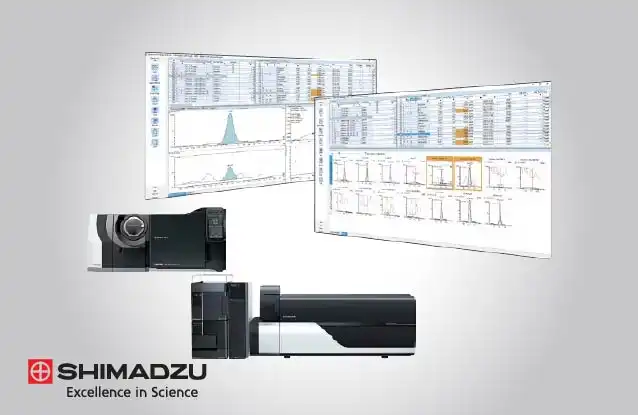
Shimadzu’s software strategy is technically focused on minimizing the "idle time" of analytical instruments by shifting routine decision-making from the operator to the system’s internal logic. This is achieved through the integration of autonomous diagnostic routines that monitor spectral integrity in real-time.
By combining this "Analytical Intelligence" with a robust multi-user database architecture, the platform ensures that laboratories can maintain a continuous, high-throughput workflow without sacrificing the precision required for trace-level elemental determination.
Development Assistant for Automated Method Creation
The Development Assistant is a core technical feature that automates the creation of analytical methods. By analyzing the qualitative data of a sample, the software automatically selects the optimal isotopes for measurement and identifies potential spectral interferences. It recommends the best collision or reaction gas settings, significantly reducing the time required for method validation and ensuring that even novice users can generate expert-level results for unknown matrices.
Diagnosis Assistant for Real-Time Interference Monitoring
To ensure data accuracy, the Diagnosis Assistant technically evaluates the measurement results for all isotopes. It monitors for spectral overlaps and matrix interferences by comparing theoretical isotopic ratios with observed intensities. If an anomaly is detected, the software flags the results and suggests corrective actions, such as changing the collision gas mode or applying a different mathematical correction factor, thereby maintaining high reliability in trace analysis.
Integrated Analytical Intelligence for Instrument Tuning
The software technically manages the optimization of ion optics and plasma conditions through automated tuning protocols. It systematically adjusts parameters like the torch position, nebulizer gas flow, and lens voltages to maximize sensitivity and minimize oxide formations or doubly charged ions. These automated sequences ensure the instrument is operating at peak performance before every batch, providing consistent mass resolution across the entire mass range.
Comprehensive Quality Control Management
For regulated laboratories, the software provides an extensive suite of Quality Control (QC) functions. This includes automated checks for calibration curve linearity, internal standard recovery, and spike recovery. If any QC parameter falls outside of pre-defined technical thresholds, the software can be programmed to automatically execute a rinse sequence, re-calibrate the instrument, or re-analyze the affected samples, ensuring total data defensibility.
Seamless Hyphenation with Speciation Systems
The software technically supports the synchronization of ICP-MS with high-performance liquid chromatography (HPLC) or gas chromatography (GC) for speciation analysis. It handles the triggering of data acquisition and provides specialized windows for peak integration and quantification of different chemical forms of an element. This integrated approach allows for the simultaneous measurement of total elemental concentration and specific species, such as organic versus inorganic arsenic.
Centralized Data and Lab Management Integration
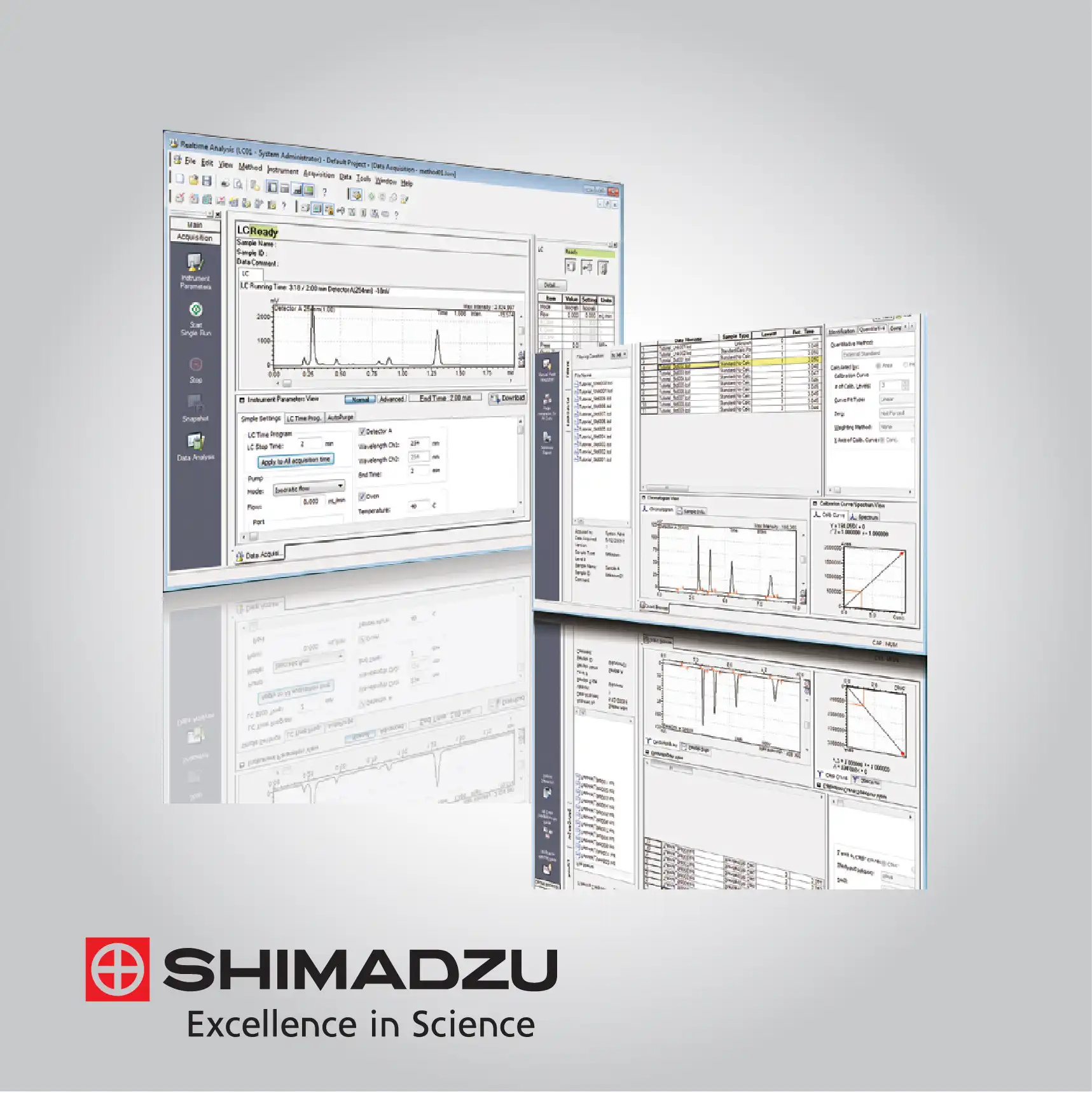
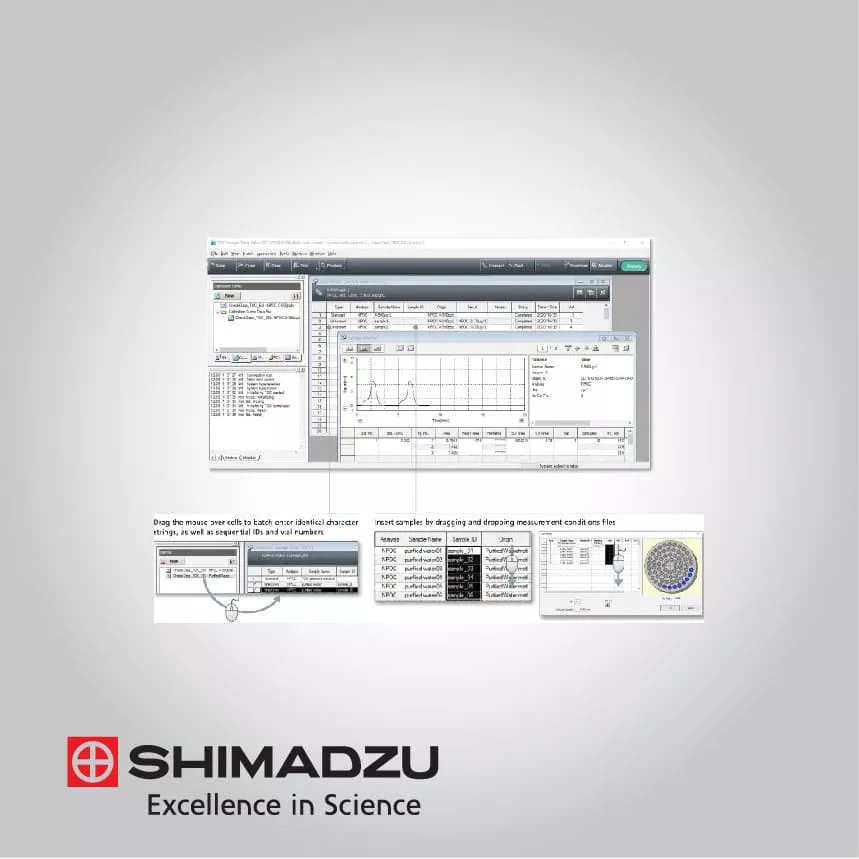
The platform is designed to function within a networked laboratory environment, integrating with Laboratory Information Management Systems (LIMS). Technically, it allows for the centralized storage of acquisition methods, sample logs, and analytical results. This architecture ensures that data from multiple instruments can be accessed and reviewed from a single workstation, facilitating efficient resource management and streamlined reporting workflows.
Advanced Inter-Element Correction (IEC) Algorithms
To address complex isobaric overlaps that cannot be resolved by collision gases alone, the software employs advanced Inter-Element Correction (IEC) algorithms. Technically, these mathematical models utilize the intensities of interference-free isotopes to calculate and subtract the contribution of overlapping species from the target analyte signal. This dual-layer approach (hardware collision plus software correction) ensures the highest level of spectral purity.
Compliance-Ready Audit Trails and Security
The software environment is technically optimized for data integrity, featuring multi-level user access controls and encrypted audit trails. Every modification to a method, batch, or data point is time-stamped and linked to a specific user ID. This technical transparency is vital for meeting the requirements of GxP and ISO 17025, providing auditors with a clear, unalterable history of the entire analytical process from sample entry to final approval.
Click here for more information about Shimadzu range of products