




Home » Products » Petro & Energy Analysis » Cold Properties » PAC Cold Filter Plugging Point Application
Cold Filter Plugging Point Application
|
Energy and Petrochemical Industries
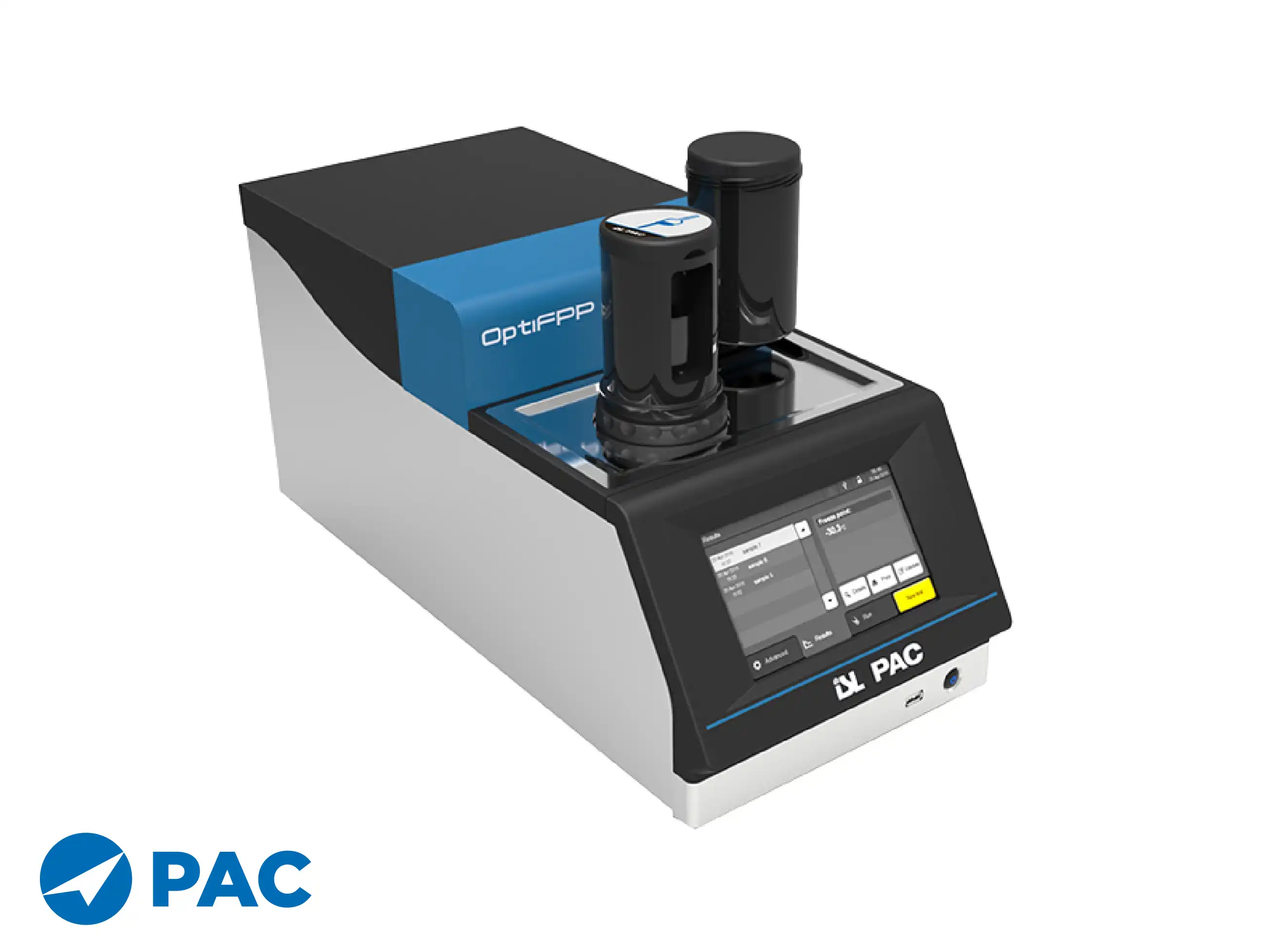
PAC Cold Filter Plugging Point Application
Cold Filter Plugging Point (CFPP) testing is one of the most critical analyses for diesel and biodiesel fuels intended for cold climates. It determines the lowest temperature at which fuel will still pass through a standardized filtration device under defined cooling conditions. This measurement ensures that fuels can perform reliably without clogging filters in engines and distribution systems during winter operation.
PAC’s CFPP testing solution provides fully automated analysis that meets EN 116 and IP 309 methods, ensuring international compliance. By simulating real-world cold weather conditions, it provides valuable insight into the operability of diesel fuels and helps producers guarantee performance across global markets.
Critical Evaluation of Low-Temperature Operability
The Cold Filter Plugging Point (CFPP) is a vital technical parameter used to estimate the lowest temperature at which a fuel will give trouble-free operation in a diesel engine. Technically, it determines the highest temperature at which the volume of fuel fails to pass through a standardized wire mesh filter within a specified time when cooled under controlled conditions. PAC's application for CFPP testing is essential for fuel producers and distributors to ensure that diesel and domestic heating fuels remain viable in winter climates, preventing vehicle breakdowns caused by wax crystals blocking fuel filters.
Patented Integrated Cooling Technology
A significant technical advantage of the PAC OptiFPP system is its patented built-in cooling system. This internal technology allows for ultra-low temperature testing down to $-70^{\circ}\text{C}$ without the need for any external liquid connections or bulky cryostat chillers. The system is completely self-contained, ensuring precise cooling rates as required by international standards. This integrated approach not only saves laboratory bench space but also eliminates the hazards and maintenance associated with external cooling fluids and hoses.
High-Precision Optical Detection Mechanism
The OptiFPP utilizes an advanced optical detection system to monitor the flow of the fuel through the filter. Technically, the system tracks the time it takes for the fuel to fill a specialized pipette and return to the test jar. The detection sensors are highly sensitive to the initial formation of wax crystals that hinder flow. By automating this process, the system removes the human error and subjectivity inherent in manual testing, providing a resolution and accuracy that ensures consistent results across different lab environments.
Automated Cleaning and Sample Handling
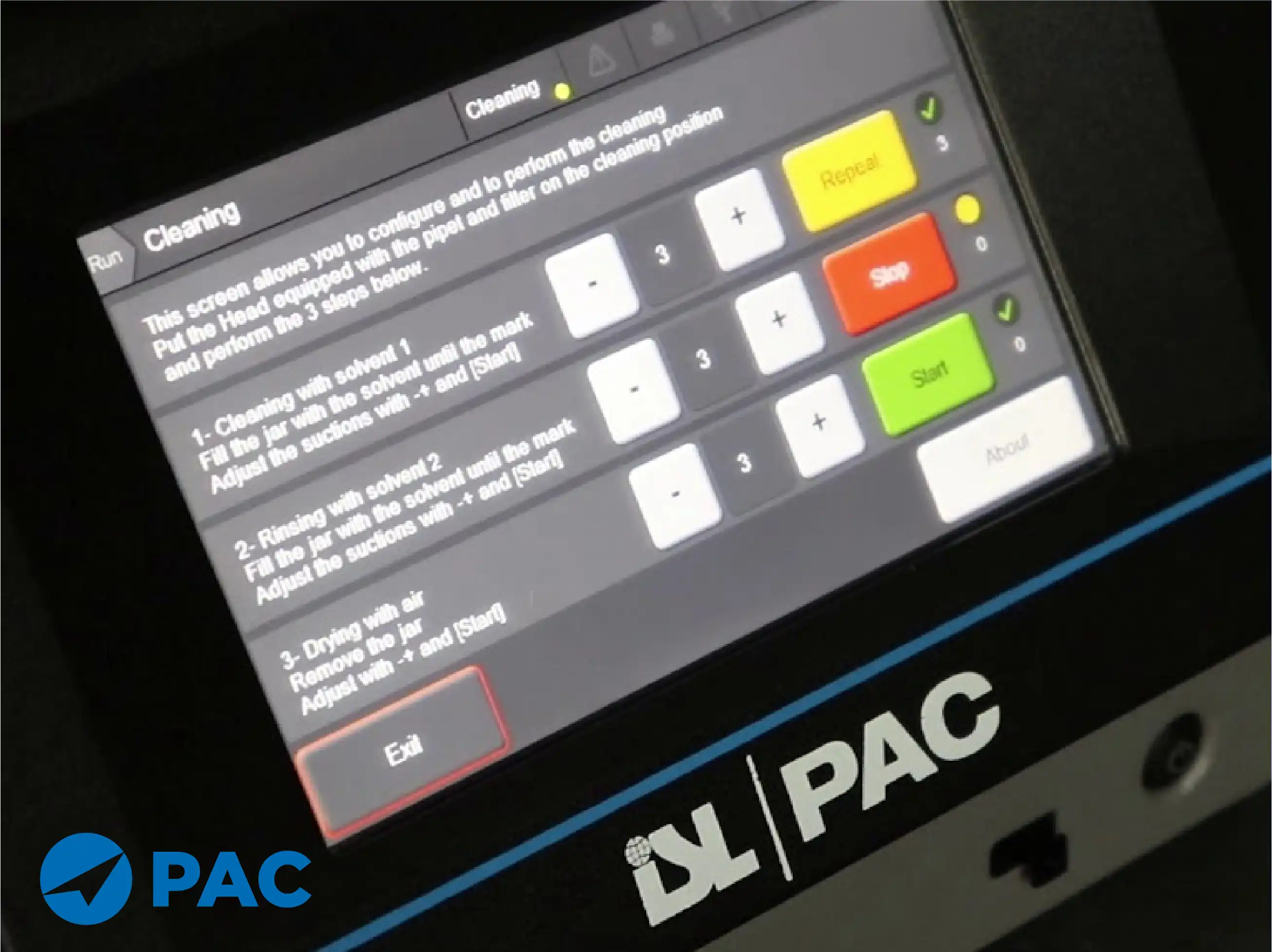
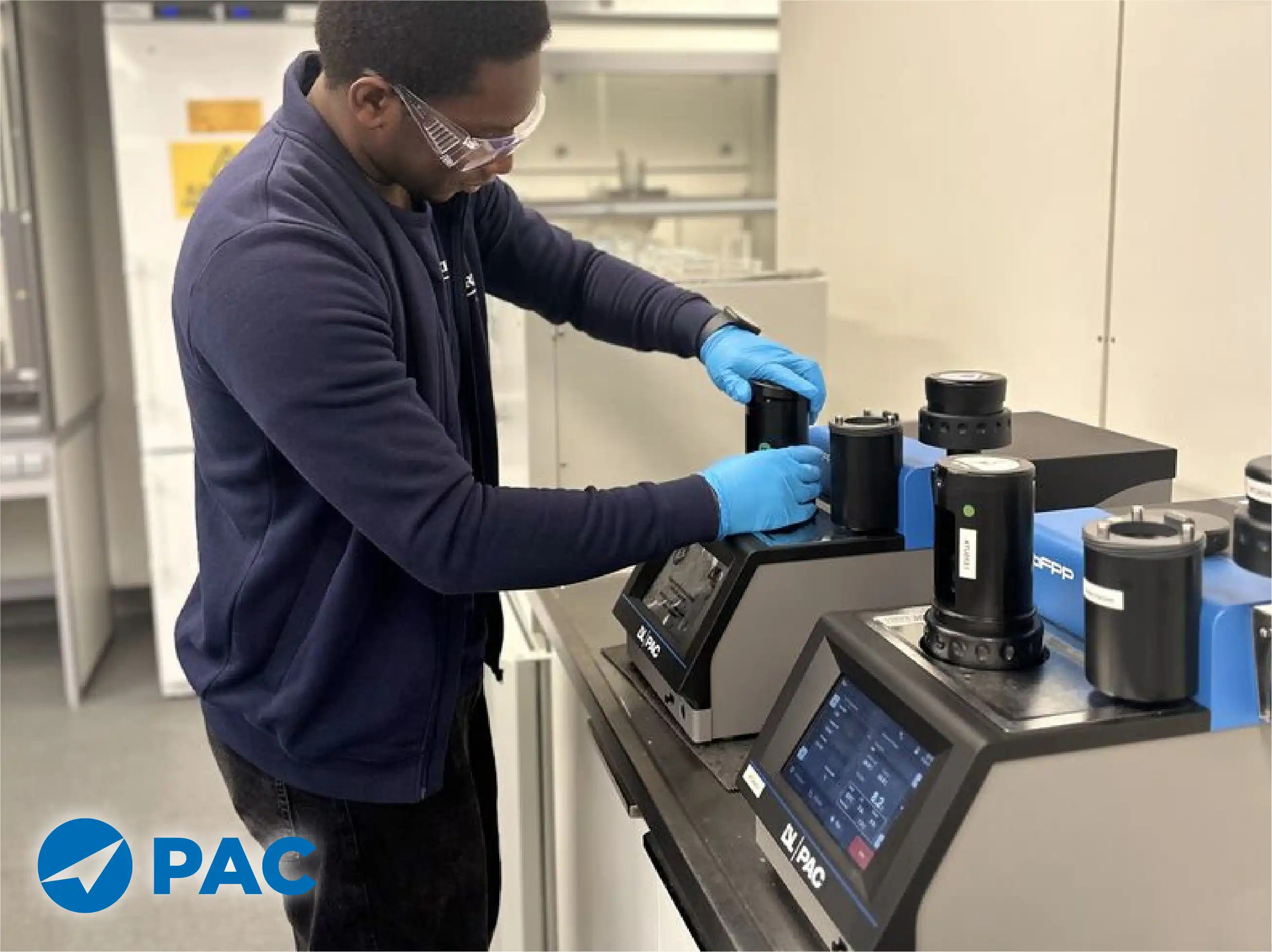
To ensure high throughput and minimize cross-contamination, the system features an automated cleaning cycle. Once a test is completed, the system can be programmed to clean the pipette and filter assembly, making it ready for the next sample immediately. This technical automation is paired with an ergonomic design, including a cordless testing head that allows for easy sample introduction. These features combined significantly reduce the "operator time" per test, allowing lab personnel to focus on other high-value tasks while the instrument operates independently.
Compliance with Global Regulatory Standards
PAC CFPP applications are engineered to comply strictly with major international test methods, including ASTM D6371, EN 116, EN 16329, IP 309, and JIS K2288. These standards define the exact suction pressure, cooling profiles, and filter dimensions required for a valid CFPP determination. By adhering to these protocols, the OptiFPP ensures that results are legally and commercially defensible for global trade. The instrument's software comes pre-loaded with these methods, ensuring "plug-and-play" compliance for quality control laboratories.
Flexibility for Specialized Research and Biofuels
Beyond routine testing, the system provides 100% configurability for research and development. Technicians can modify cooling rates, suction pressures, and detection sensitivities to study the behavior of new fuel additives or biodiesel blends. As biodiesel (FAME) concentrations increase in modern fuels, their cold flow behavior becomes more complex. The OptiFPP's technical flexibility allows for the detailed characterization of these blends, ensuring that the additive packages are effective at suppressing crystal growth and maintaining filterability.
Enhanced Data Traceability and LIMS Integration
The technical data generated by the OptiFPP is managed through a sophisticated software interface that supports full traceability. Every test result includes the complete cooling curve, suction times, and calibration history. The system is designed for seamless integration with Laboratory Information Management Systems (LIMS), allowing for the automated transfer of data. This digital integration reduces manual data entry errors and ensures that a permanent, searchable record of all cold flow analysis is maintained for auditing and quality assurance purposes.
Superior Repeatability and Reliability
The core technical promise of PAC's CFPP application is superior repeatability and reproducibility. By controlling every variable of the test—from the vacuum pressure used for suction to the precise temperature of the cooling jacket—the system ensures that the same sample will yield the same result every time. This reliability is critical for refineries where a deviation of even one degree in the CFPP result can lead to significant economic losses or the rejection of entire fuel batches during pipeline transport.
Read More About PAC Products Here
.webp)
.webp)

.webp)
.webp)

.webp)