.webp)
ICP-OES Spectrometers
|
Radial, axial or dual view
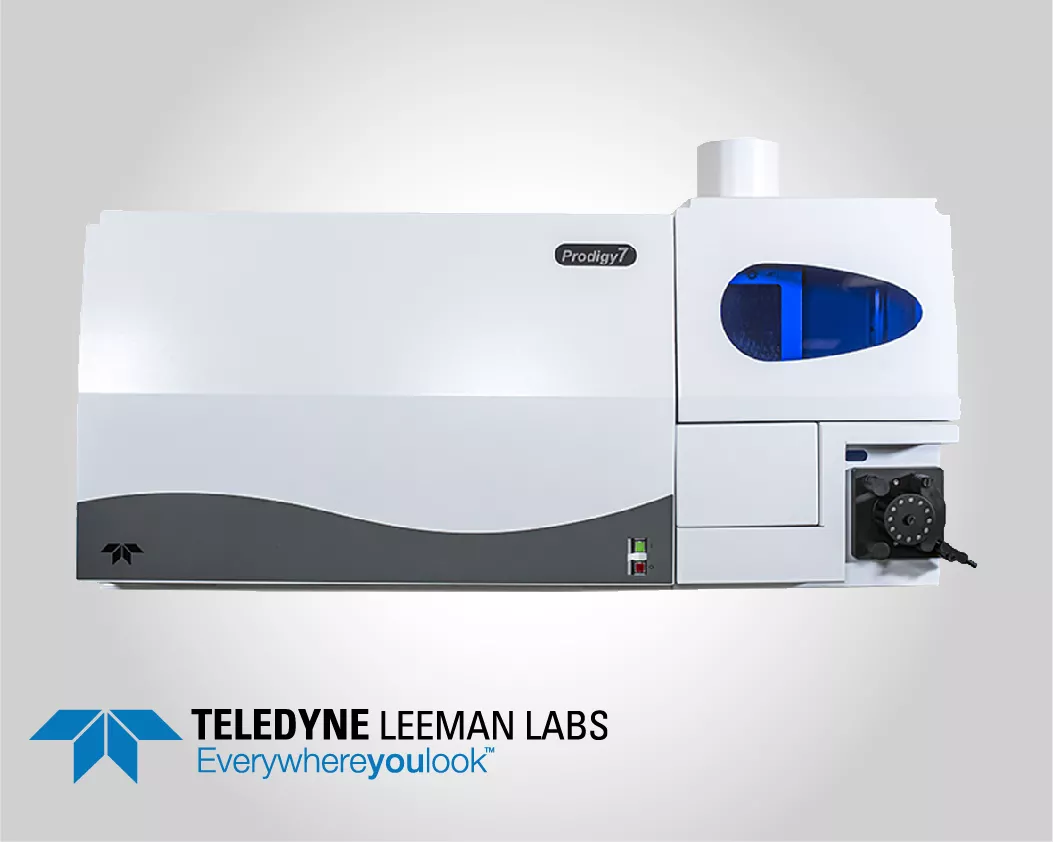
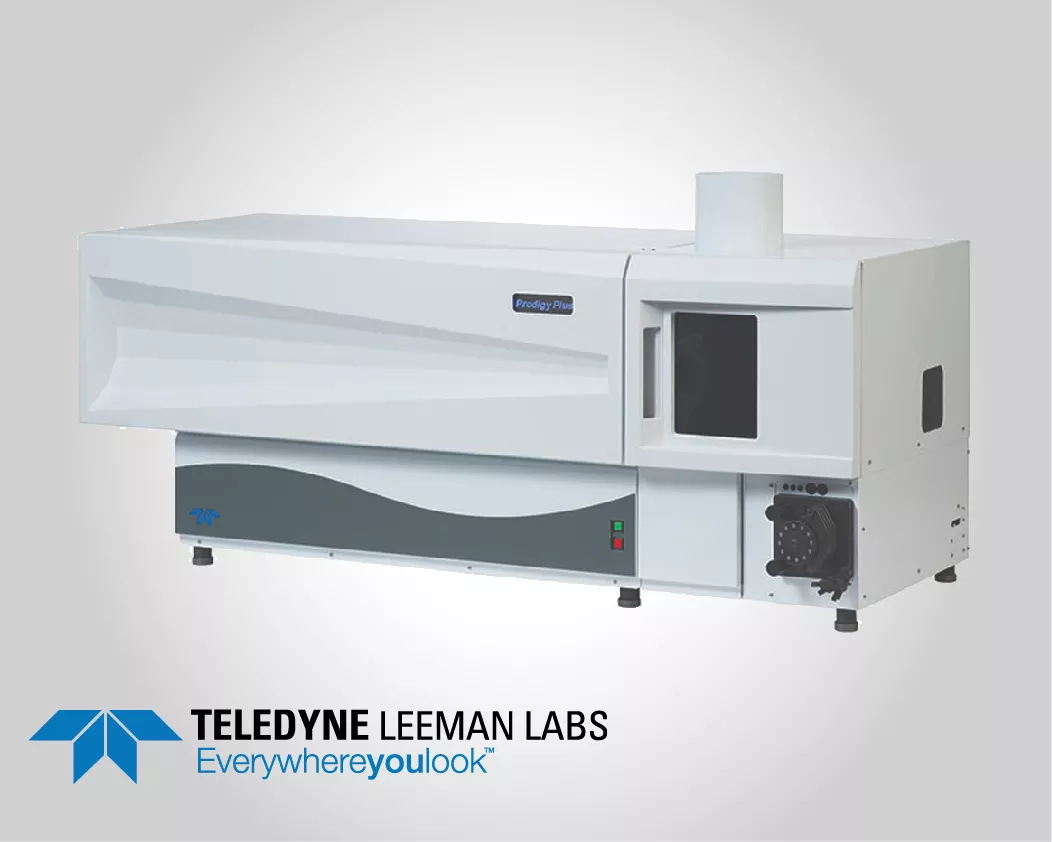
Teledyne ICP-OES Spectrometers
Teledyne Labs ICP-OES spectrometers represent a pinnacle of analytical engineering, specifically designed to meet the diverse needs of modern elemental analysis laboratories. These instruments utilize Inductively Coupled Plasma-Optical Emission Spectroscopy (ICP-OES) to identify and quantify elements across a broad concentration range. A core technical advantage lies in the integration of high-resolution Echelle optical systems and large-format CMOS array detectors. This combination allows for true simultaneous measurement across the entire wavelength spectrum, typically from 165 nm to 1100 nm.
The technical versatility of the Teledyne platform is further enhanced by its flexible viewing configurations, including radial, axial, and dual-view modes. This allows users to optimize the system for either sensitivity—achieving sub-ppb detection limits in axial mode—or for high-matrix tolerance and dynamic range in radial mode. To support these core analytical capabilities, Teledyne integrates advanced sample introduction technologies, such as ultrasonic nebulization and rapid injection systems. These components work in tandem to increase analyte transport efficiency to the plasma and reduce stabilization times, resulting in higher throughput and lower argon consumption.
Advanced CMOS Array Detector Technology
The heart of the Teledyne ICP-OES system is a large-format CMOS based solid-state array detector. Technically, this detector is engineered with millions of pixels, enabling the capture of the entire ICP spectrum in a single, high-speed exposure. This "True Simultaneous" measurement capability is significantly faster than traditional sequential detectors, providing greater linearity and the ability to record a permanent full-frame image of every analysis. This ensures that no analytical data is lost and allows for retrospective interference correction without re-running samples.
High-Dispersion Echelle Optical Systems
To achieve superior resolution and minimize spectral interferences, the spectrometers utilize advanced Echelle optical designs. With focal lengths ranging up to 800 mm, these optics provide the dispersion required to separate closely spaced emission lines in crowded spectra. The temperature-controlled optical housing ensures long-term stability, reducing the frequency of recalibration. This high-resolution capability is critical for accurately quantifying trace elements in the presence of complex, high-intensity matrices such as steel, ores, or brines.
Dual-View Configuration for Dynamic Range Optimization
The dual-view optical configuration combines the sensitivity of axial viewing with the robustness of radial viewing. Technically, axial viewing aligns the plasma discharge with the optical axis to maximize the light-path length, enhancing detection limits for trace elements. Conversely, radial viewing observes the plasma from the side, which is more tolerant of high dissolved solids and reduces easily ionized element (EIE) interferences. The system can switch between these modes or utilize both in a single run, providing an expansive dynamic range that covers concentrations from parts-per-billion to percentage levels.
Ultrasonic Nebulization for Enhanced Sensitivity
For applications requiring ultra-trace detection, Teledyne incorporates ultrasonic nebulizers. This technology utilizes a piezoelectric transducer to create a fine, high-density aerosol, increasing analyte transport efficiency to the plasma by up to ten times compared to conventional pneumatic nebulizers. An integrated desolvation system, featuring a heated tube and an electrothermally cooled condenser, removes excess solvent to prevent plasma instability. This results in significantly lower detection limits and improved signal-to-noise ratios for aqueous samples.
Full Spectral Access and Intelligent Data Processing
Full Spectral Access (FSA) is a hallmark technical feature that captures every available wavelength in every analysis. This technology allows laboratories to identify and quantify elements that were not originally part of the analytical method. The software's ability to store the complete spectrum enables users to go back and examine specific wavelengths for interferences or to quantify new elements in previously analyzed samples. This "digital record" of the sample provides an essential tool for qualitative screening and method development.
Rapid Sample Introduction and Throughput Optimization
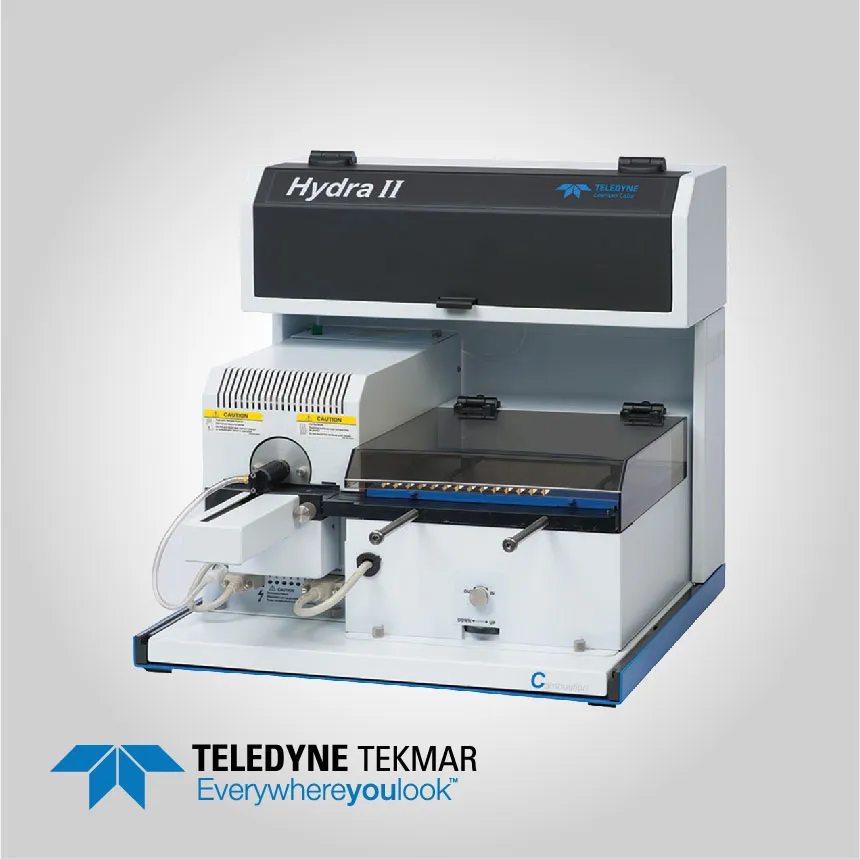
To maximize laboratory productivity, the systems can be equipped with rapid sample introduction accessories. These devices utilize high-speed vacuum pumps and multi-port injection valves to rapidly load sample loops while simultaneously rinsing the uptake path. This technical approach virtually eliminates stabilization and washout times, which typically account for a significant portion of the total analysis cycle. The result is a substantial increase in sample throughput and a marked reduction in argon and power consumption per sample.
Robust RF Generator and Plasma Source Stability
Analytical precision in ICP-OES is highly dependent on the stability of the plasma source. Teledyne utilizes a free-running, solid-state RF power supply, typically operating at 40.68 MHz. This generator is engineered to rapidly adjust to changes in sample matrix, such as switching from aqueous solutions to high-solids or organic solvents, without extinguishing the plasma. The "Twist-n-Lock" torch design further ensures consistent alignment and easy maintenance, providing a reliable and reproducible excitation environment for diverse sample types.
Automated Dilution and Intelligent Sample Preparation
The integration of automated sample handling and dilution systems addresses the challenges of high-concentration samples and calibration curve preparation. These systems use high-precision syringe pumps and vortex mixing to perform volume-to-volume dilutions accurately. By automating the preparation of standards and the dilution of over-range samples, the system reduces manual errors and minimizes exposure to hazardous chemicals. This technical automation ensures that the entire workflow, from raw sample to final result, maintains the highest level of analytical integrity.
Click here for more information about Teledyne range of products